Built with Picsha AI
These apps run in production on the same REST API, MCP server and CDN you get with an API key: from photo storefronts and a print lab to an enterprise DAM, a consumer headshot app, and our proofs of concept in contextual e-commerce personalization and computational biology.
StrideContext
Contextual visual personalization at edge-cached scale for e-commerce
Traditional storefronts show every shopper the same studio photo, whatever their climate or intent. StrideContext pairs a CPU compositing fast path (?bg_asset=) with generative MIMI editorial scenes, so one render per shopper context is amortized across every later visitor at the CDN edge. An MCP/A2A shopping assistant and pre-rendered cart recovery creatives complete the loop.
Live weather & context
Resolves real-time conditions from Open-Meteo (or instant city presets) into canonical context keys shared by every shopper in that segment.
CPU compositing fast path
Layers one transparent product cutout over reusable library backdrops with ?bg_asset=, so renders across an entire catalog carry no generative charge.
Generative MIMI 1K & 2K
Creates bespoke editorial scenes with natural light and shadows on demand for hero placements, amortized across every later visitor.
Signed, edge-cached URLs
Content-addressed derivatives served from HMAC-signed cdn.picsha.ai URLs, with a non-blocking HTTP 202 and async hot-swap on cold misses.
MCP & A2A shopping assistant
A conversational agent queries Picsha over the hosted MCP server or A2A JSON-RPC, inspects catalog assets and triggers personalized renders in chat.
Lifecycle cart recovery
Pre-renders contextual MIMI 2K creatives in the background when a cart is abandoned, so recovery emails open with no cold-render wait.
Built with Next.js, the Picsha AI REST API, render CDN and MIMI generative engine, the hosted MCP and A2A servers, Open-Meteo live weather, and Gemini 2.5 Flash.
AssayLens
Agentic visual triage and multimodal memory for computational biology
Discovery teams produce a constant stream of microscopy plates, AlphaFold PAE maps, structure renders, assay plots and papers that end up scattered across HPC directories, slide decks and lab notebooks. AssayLens turns them into one agent-ready visual workbench, automating triage, similarity search and contact sheets while preserving every raw scientific pixel. It complements AlphaFold, PyMOL and CellProfiler rather than replacing them.
Pipeline ingest
Presigned direct-to-S3 batch uploads of microscopy plates, plots and PDFs, tagged with compound and run metadata.
Ingest intelligence
Malware scan, Vision summaries, optical QC (sharpness, contrast, clipping), auto-labels, PDF text and multimodal embeddings.
Cross-modal search
One query across microscopy, AlphaFold PAE heatmaps, structure renders and full-text papers, in semantic or exact mode.
Visual similarity
Find morphologically similar plates from pixels alone through vector search over embeddings. No tags required.
MCP co-scientist
An agent on the hosted MCP server lists assets, inspects the actual pixels with view_asset, and builds 4-up contact sheets.
Integrity guardrail
Generative editing is locked off for primary scientific imagery. Delivery allows only deterministic resize, crop and format conversion.
The walkthrough uses openly licensed yeast data (CC-BY 4.0 / CC0) from the AlphaFold Protein Structure Database, PDBe, the Image Data Resource and PLOS. Built with Next.js, the Picsha AI REST API and hosted MCP server, and Gemini 2.5 Flash.
Organizations & production
The asset library and the production floor, both running on the Picsha AI API.
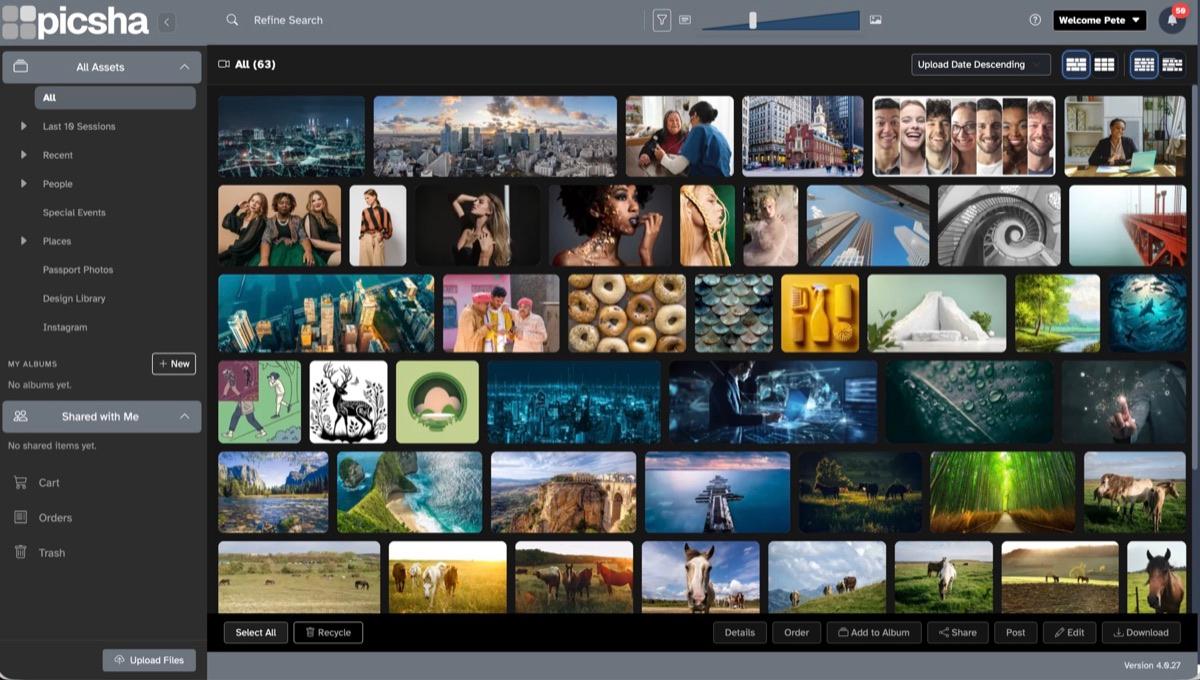
Picsha DAM
Digital asset management that actually finds things
An organization's library of photos, videos and documents. Search in plain language, name the people in your photos once, and let automatic tagging do the filing. Albums, approvals, versions, sharing and print ordering are built in.
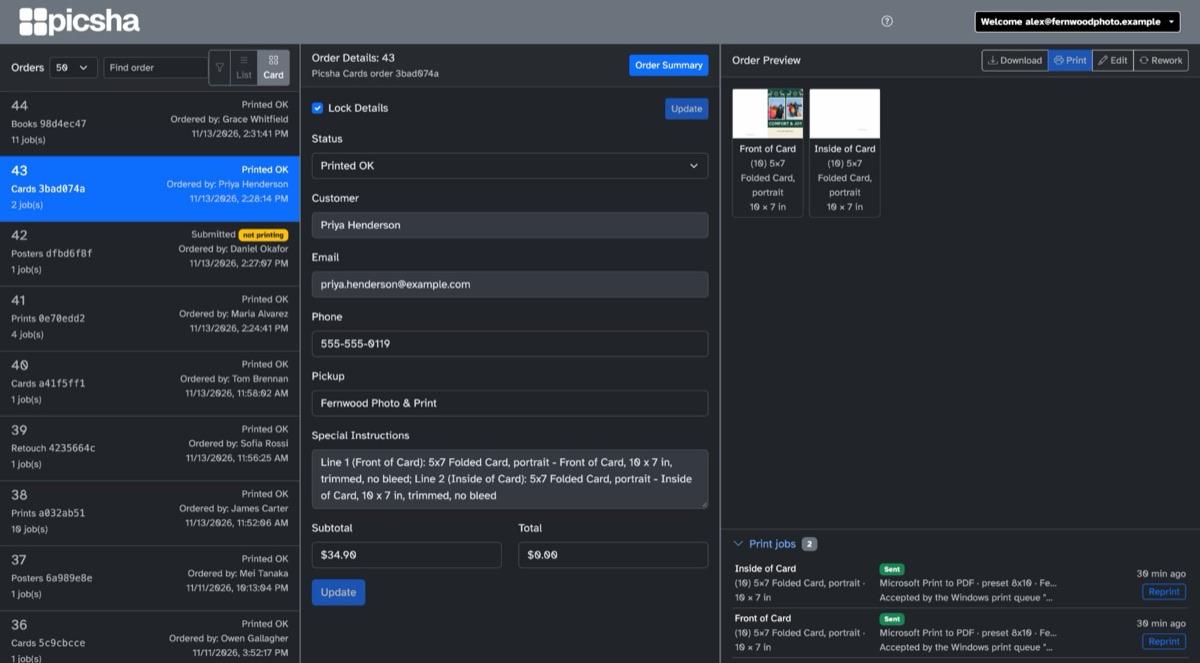
Picsha Lab
The production screen for every order
Orders from Picsha DAM and every connected storefront land in one queue. Staff check and fix each order before it prints, reopen cards, calendars, posters and gifts in their own editor, and send jobs to printers and minilabs by hand or unattended.
Storefronts for photo retailers
White-label stores that photo retailers run under their own name. Every customer photo is a Picsha AI asset with its own retention window, and every preview and print file is rendered from it.
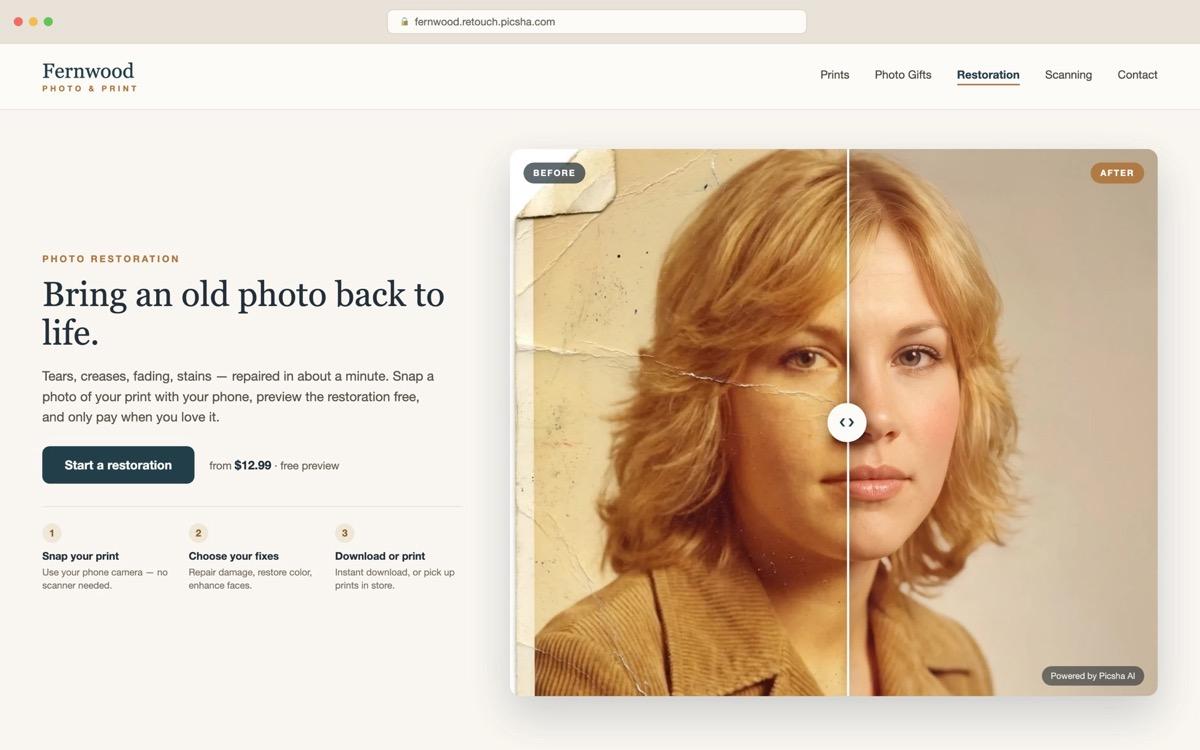
Picsha Retouch
AI photo restoration in about a minute
Customers repair torn, faded and damaged prints themselves, under the retailer's brand and at the retailer's prices, then order the restored photo as a download or a print made in the store.
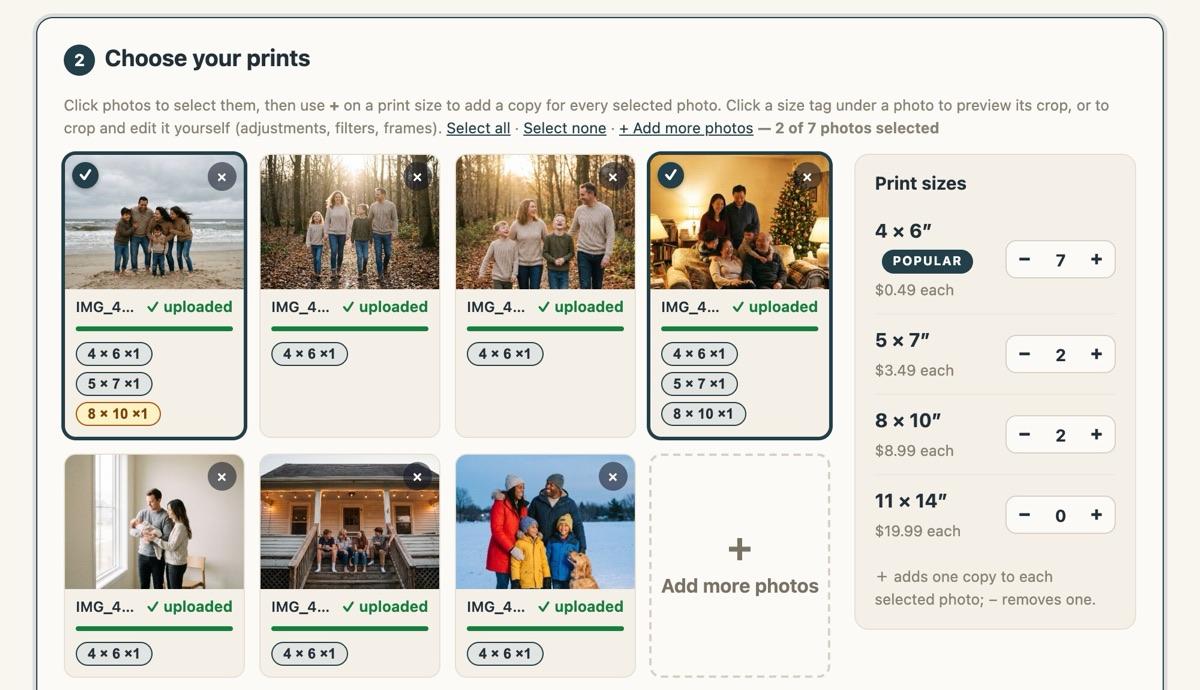
Picsha Prints
Photo prints from the camera roll
Customers upload up to 500 photos straight from their phone, HEIC included, then crop, edit and pay online. Each print size arrives at the retailer's lab as a lab-ready file, already cropped.
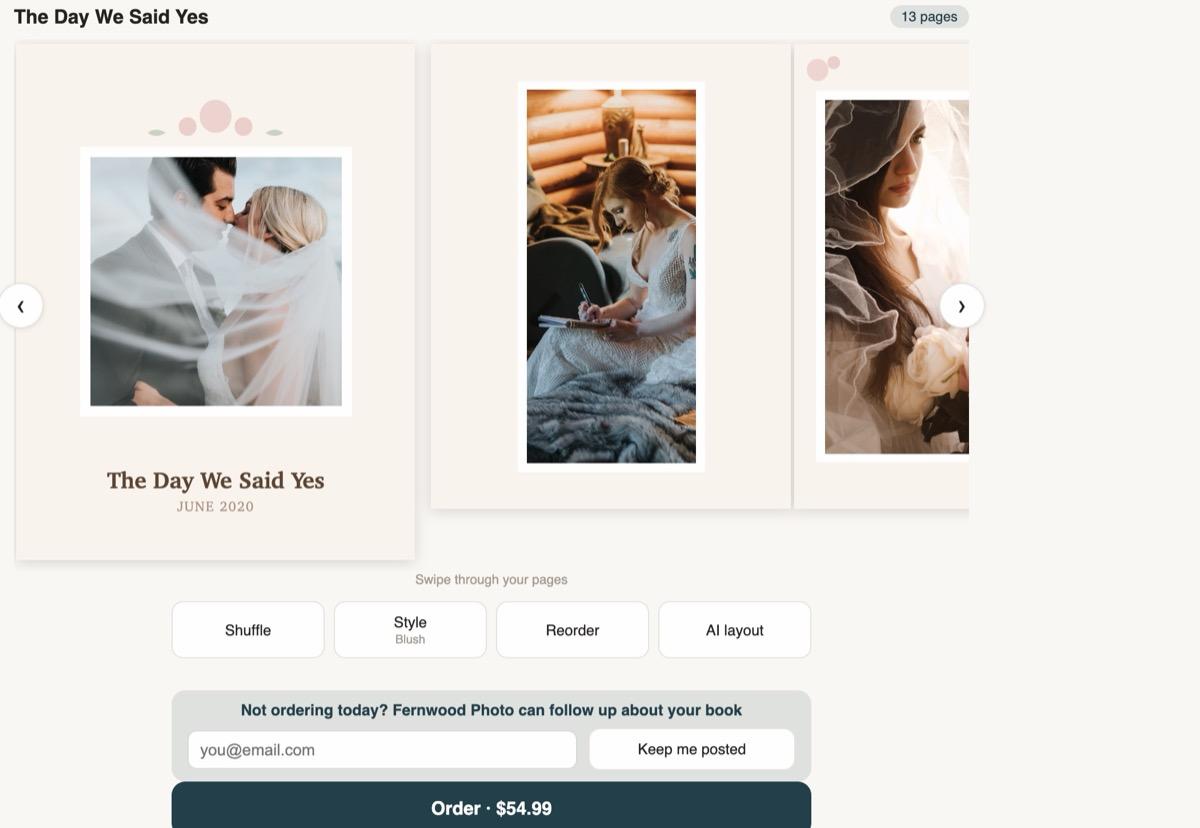
Picsha Books
Photo books that design themselves
A customer uploads their camera roll and the AI reads every photo, keeps the best, and hands back a finished book, laid out, titled and captioned, in about a minute. Printed and bound in the retailer's lab or ours.
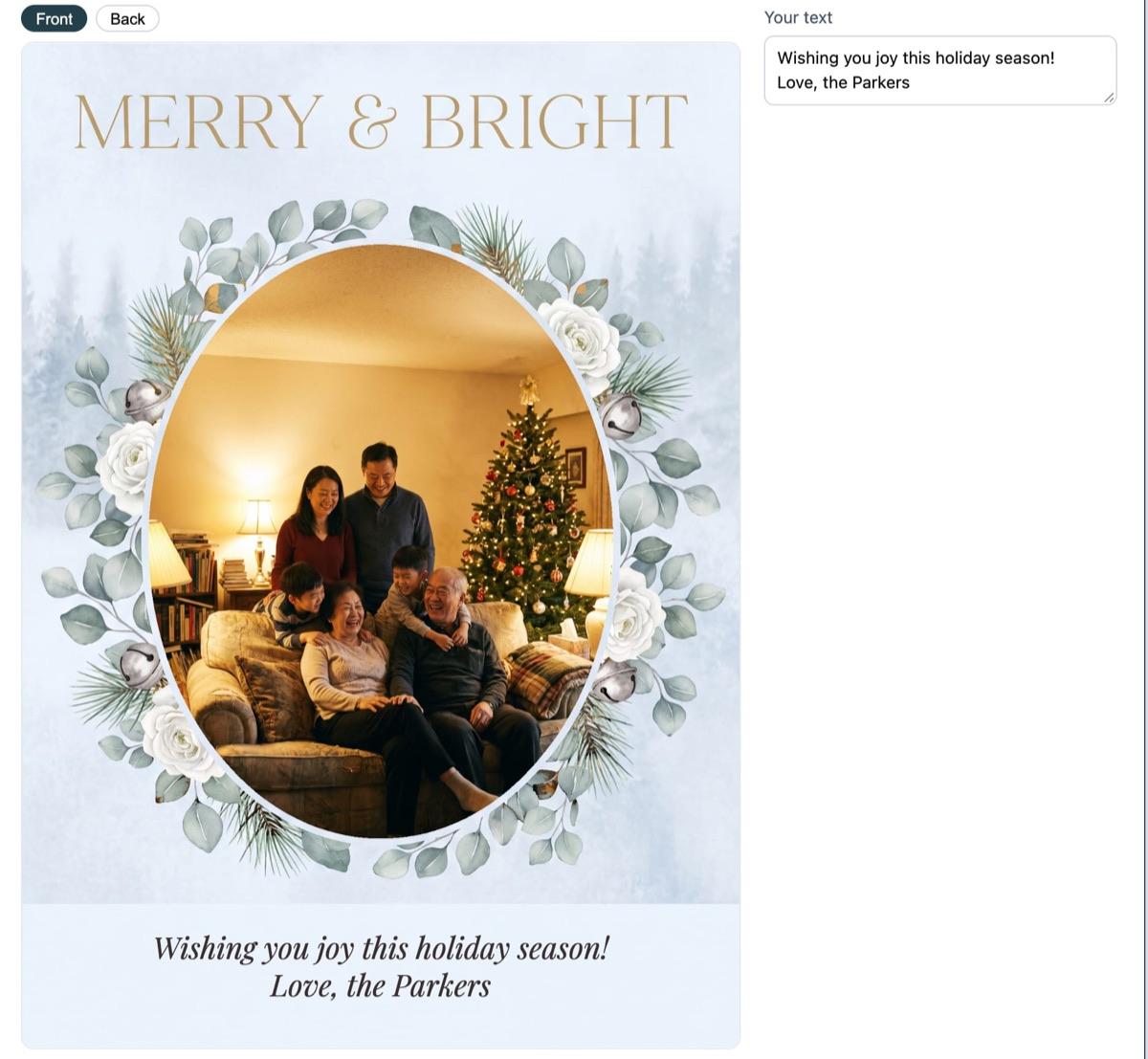
Picsha Cards
AI-designed photo cards and calendars
Customers add their photos and the AI shortlists the designs that suit them and places each photo. Folded and flat cards, single-sheet and monthly calendars, plus designs the retailer uploads for their own store.

Picsha Posters
A photo becomes vintage travel-poster wall art
The customer picks a destination and one photo, and MIMI repaints it as an illustrated travel poster with their own title, ready to print and frame in the store.
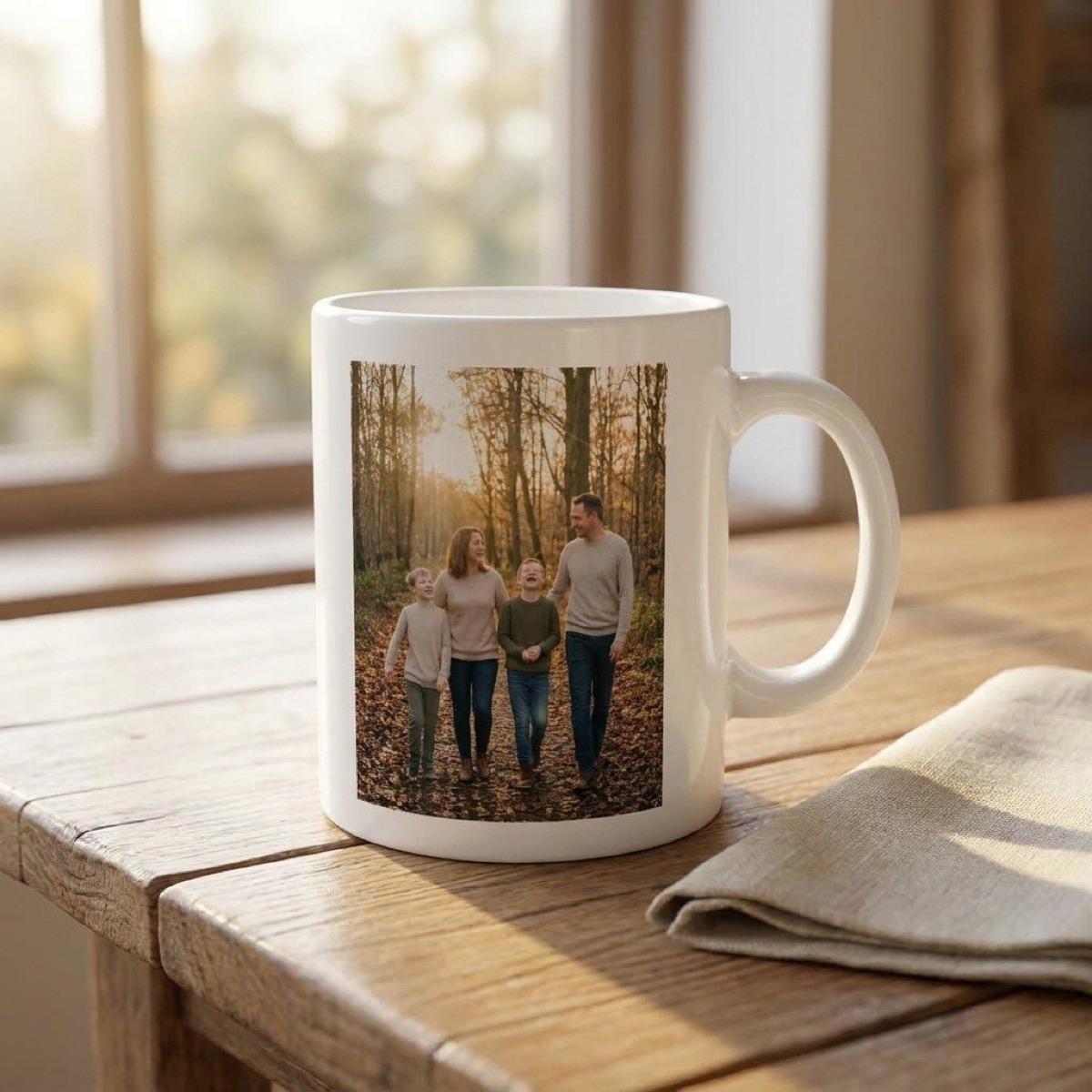
Picsha Gifts
Photos on mugs, mousepads, puzzles and ornaments
Customers see their photo on the product before they buy. The retailer presses it in-house, sends it to their lab, or has it made and shipped for them.
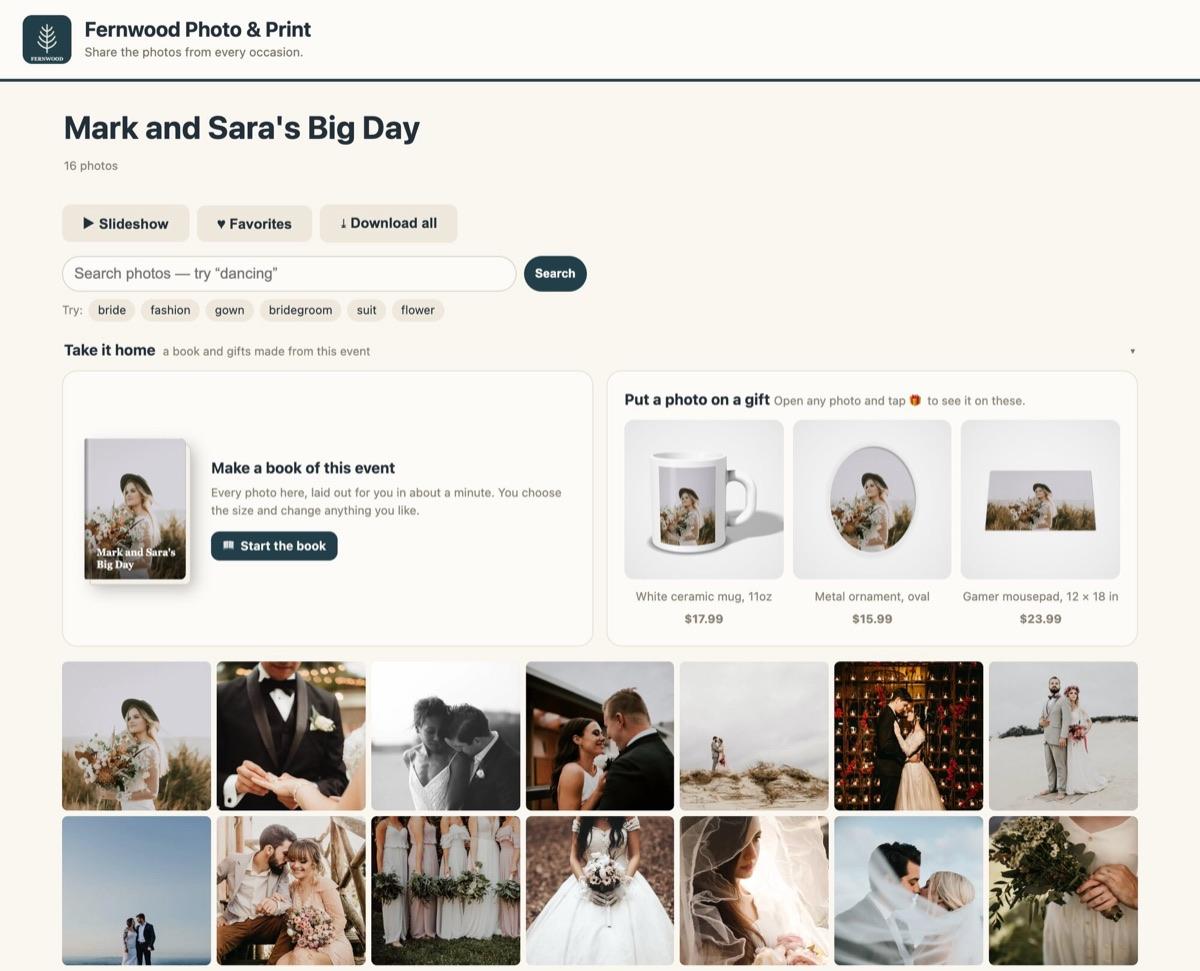
Picsha Events
Shared event galleries that sell
A QR sign at the door, guests add photos and videos from their phones, and the gallery sells prints, books and gifts through the retailer's store. Each event is a Picsha DAM group; the app itself stores no photos.
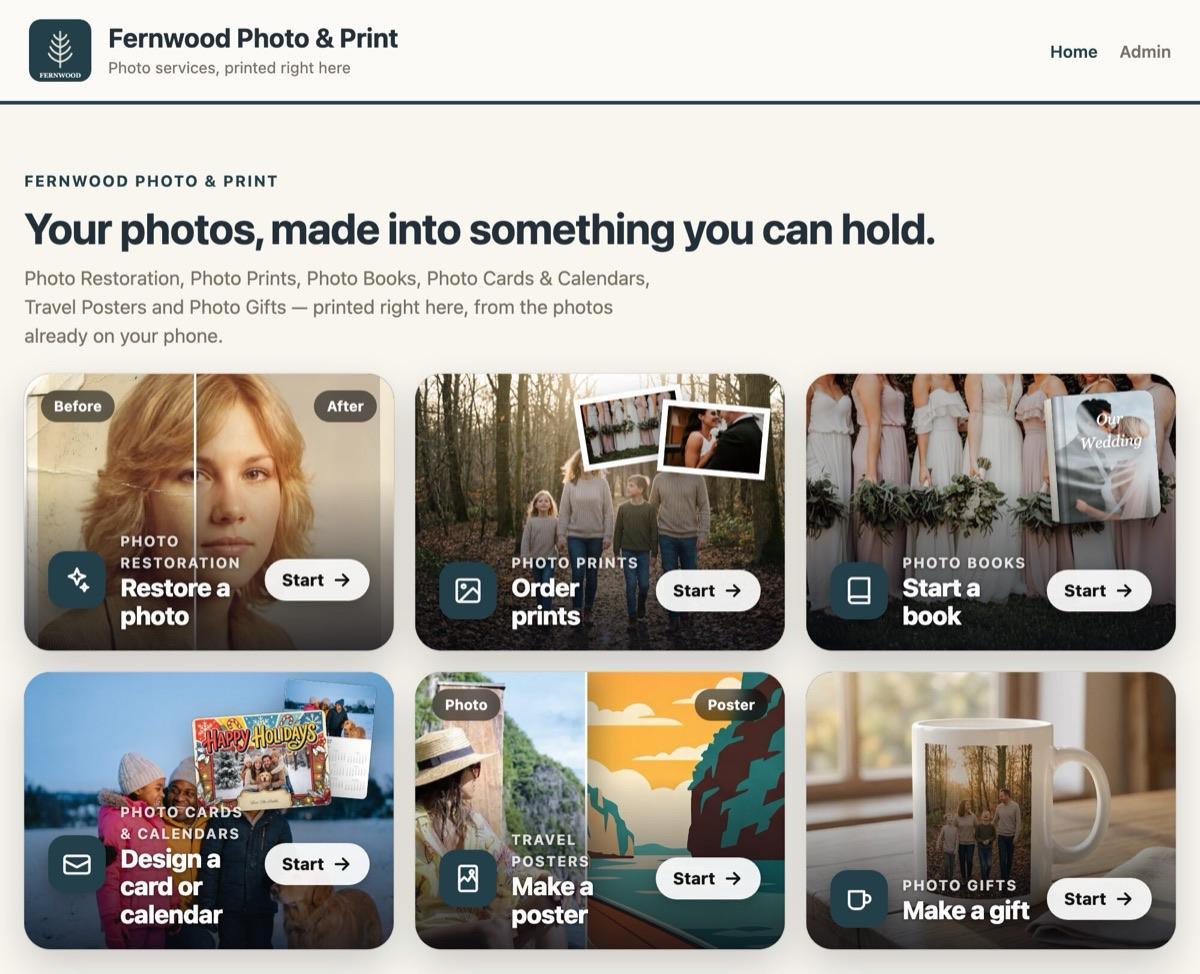
Picsha Hub
One branded front door per retailer
Every retailer gets one address that lists the storefronts they carry, one admin view of orders across all of them, and the home screen for the in-store kiosk.
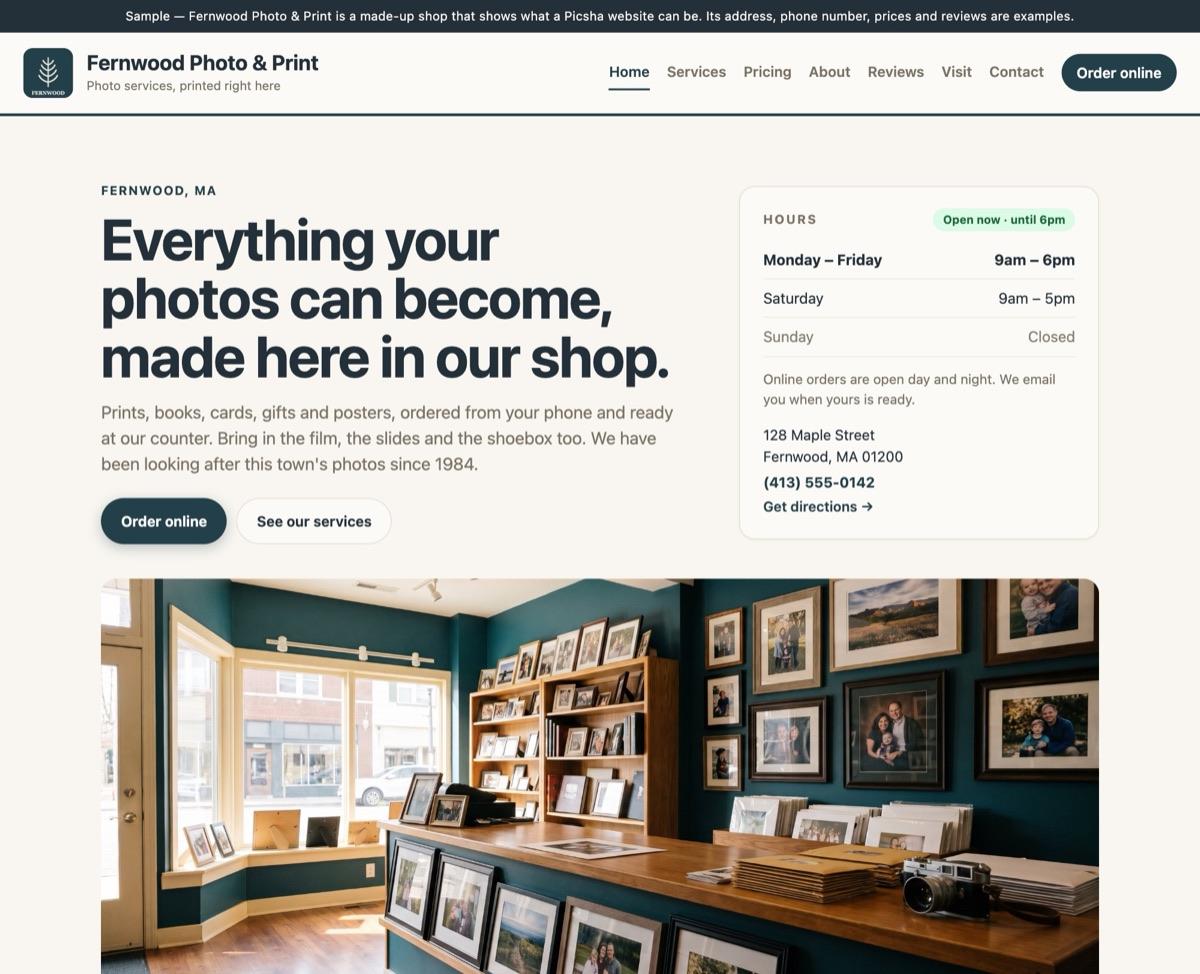
Picsha Hub Websites
The retailer's whole website, at their own address
The hub can now be the retailer's website: their own pages for hours, services and prices around their Picsha storefronts, so a customer who looks them up is one tap from ordering. Site photos live in Picsha AI and are served resized from the CDN.
Consumer
A direct-to-consumer app that pays for every render through the same API.

Proficity
Professional headshots from one selfie
One selfie in, four polished 2K headshots out in about 30 seconds, in five styles. Previews are watermarked; paying unlocks the clean images through short-lived signed render URLs.
Build the next one
Every app on this page started with an API key. Uploads, AI analysis, search, MCP tools and on-the-fly rendering are ready on day one.